


 ES
ES 

Uzbek Plov: The 1,000-Year-Old Heart of Uzbek Cuisine
Discover the legends, history, and regional styles of Uzbek plov, a UNESCO-recognized culinary tradition, and where to taste authentic osh in Uzbekistan.
In Uzbekistan, no wedding, holiday or family gathering happens without plov. Uzbeks call it osh, and it is much more than a rice dish: it is the centre of hospitality and the meal every guest remembers.
A dish with legends
One popular legend says plov was born in the 4th century BC. After Alexander the Great took Marakanda, today's Samarkand, his cooks are said to have created a filling, easy dish for his army: rice, meat, carrots and onions cooked in one pot.
Another story credits the great scholar Ibn Sina (Avicenna), born near Bukhara in 980. Many Uzbeks call him the "father of plov" because he wrote about palov osh as a nourishing food. Amir Timur is also said to have fed his armies with plov in the 14th century.
Historians believe pilaf came from Persia and spread across Central Asia along the Silk Road. Over centuries, Uzbek cooks made it their own, and today there are more than 50 regional varieties.
How real plov is made
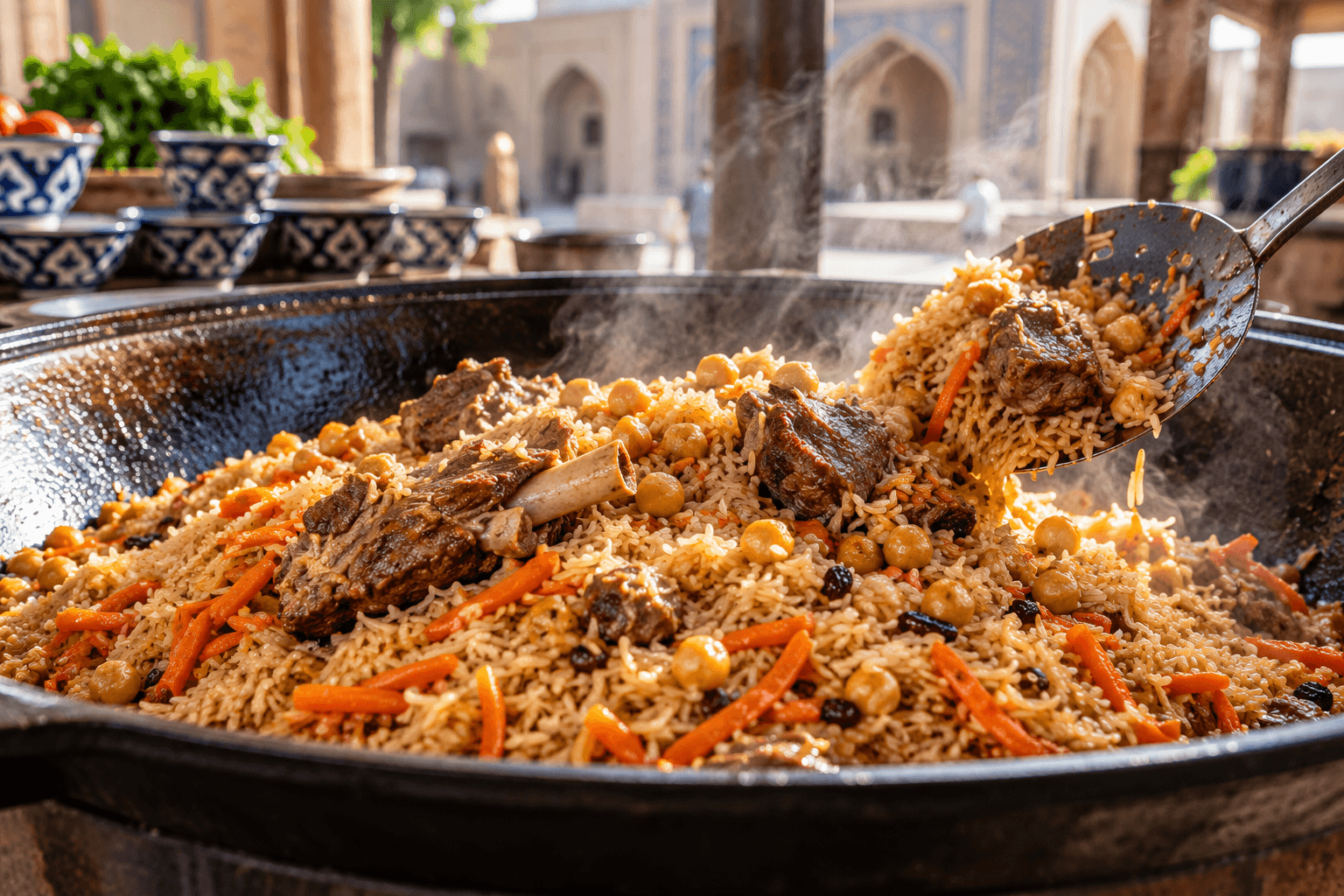
Everything happens in a kazan, a large cast-iron pot heated over an open fire. First the cook makes zirvak: lamb or beef, onions and carrots fried in oil or lamb fat with cumin. Then rice is spread on top and cooked slowly until every grain is separate and full of flavour. Chickpeas, raisins, quince or a whole head of garlic are often added.
The master of plov is called an oshpaz. At weddings a single oshpaz can cook plov for hundreds of guests from one giant kazan.
Recognised by UNESCO
In 2016, UNESCO added "Palov culture and tradition" in Uzbekistan to its Representative List of the Intangible Cultural Heritage of Humanity. It recognises not only the recipe but the traditions around it: cooking together, sharing and welcoming guests.
Every city has its own plov
• Samarkand: cooked in layers, with the meat placed on top of the rice.
• Tashkent: everything is mixed together, often served at lunchtime in huge plov centres.
• Fergana Valley: richer and more spicy.
• Bukhara: ingredients cooked separately, then layered.
Where to try it
Locals eat plov at lunch, when it is freshly cooked, and many plov centres sell out by early afternoon. The Central Asian Plov Centre in Tashkent and family kitchens in Samarkand and Bukhara are the best places to taste it.
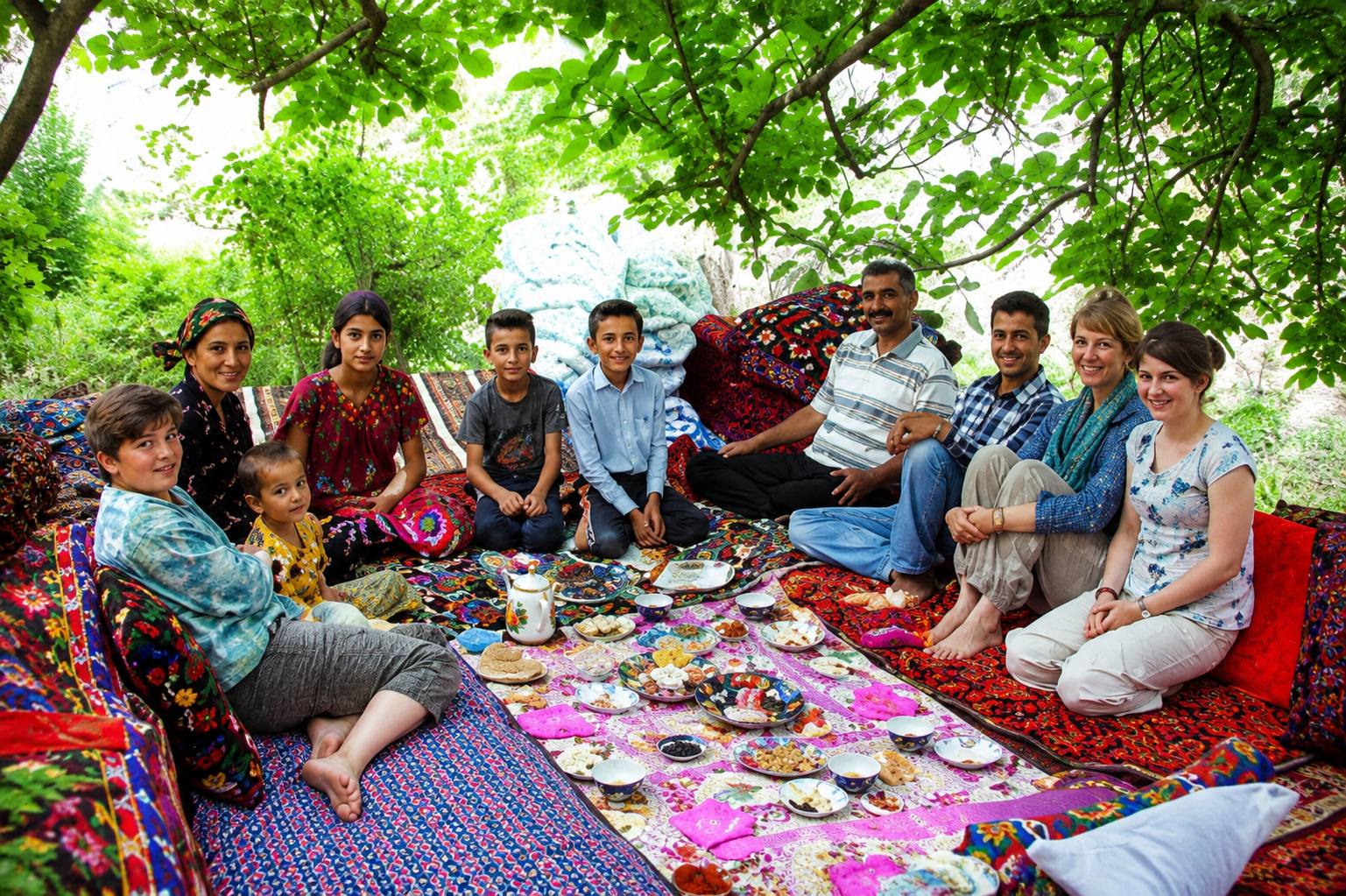
On TravelBliss tours we always make time for a real plov lunch, and our Samarkand family dinners often include home-made osh. Contact us to plan your tour of Uzbekistan's food and history.